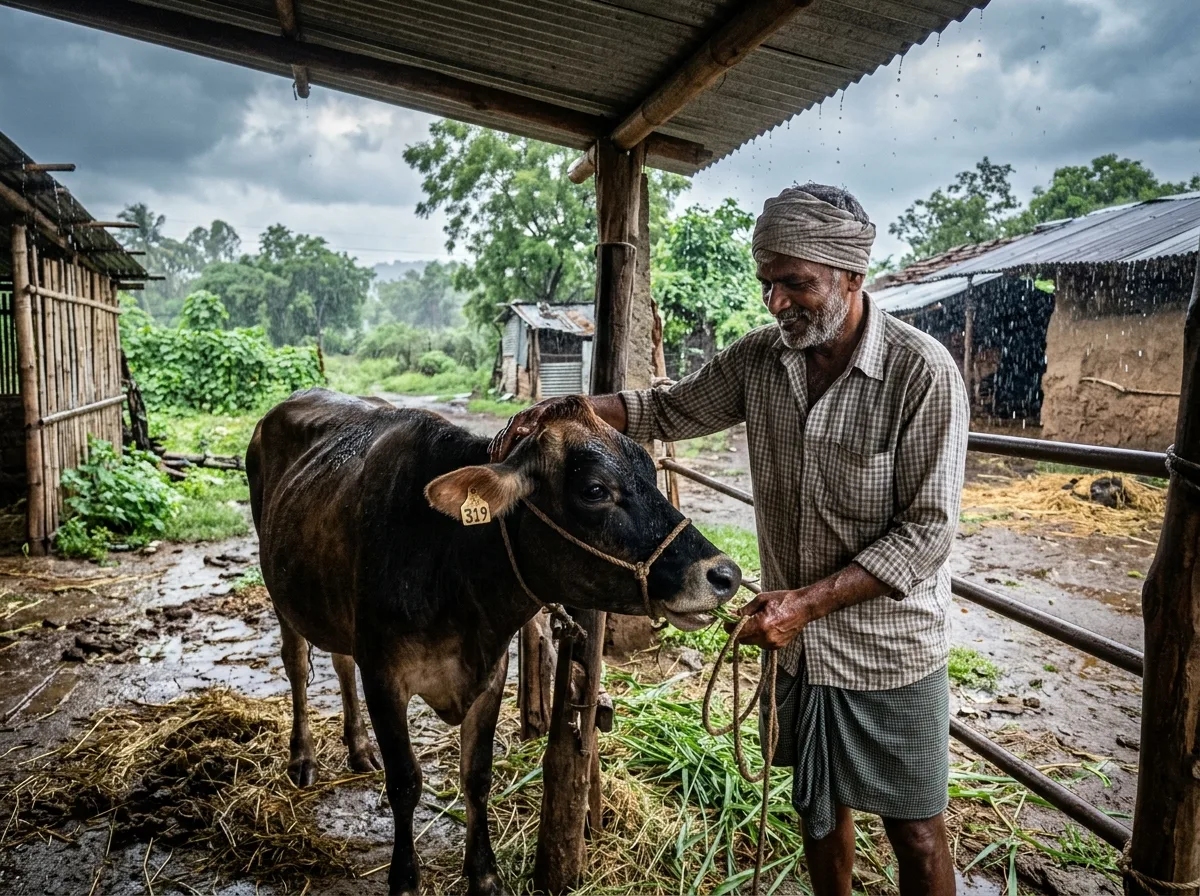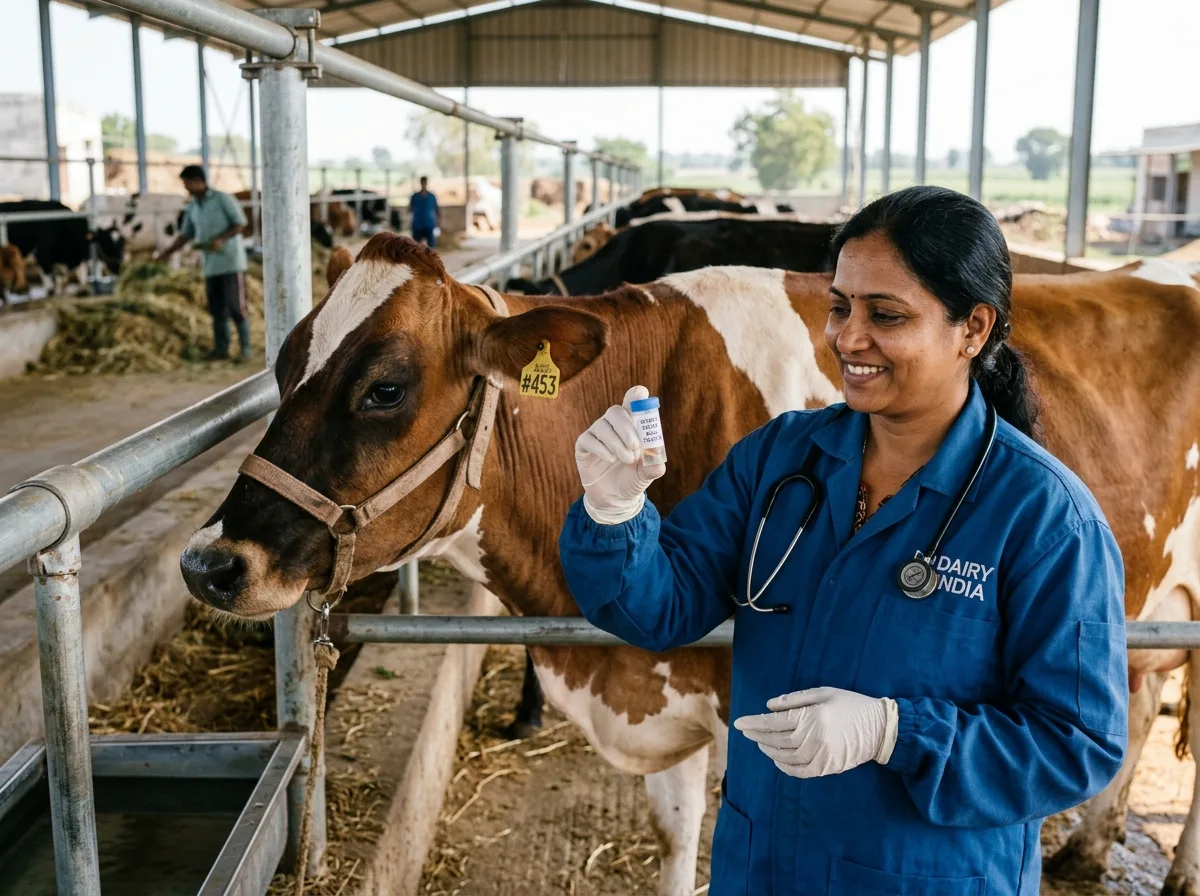
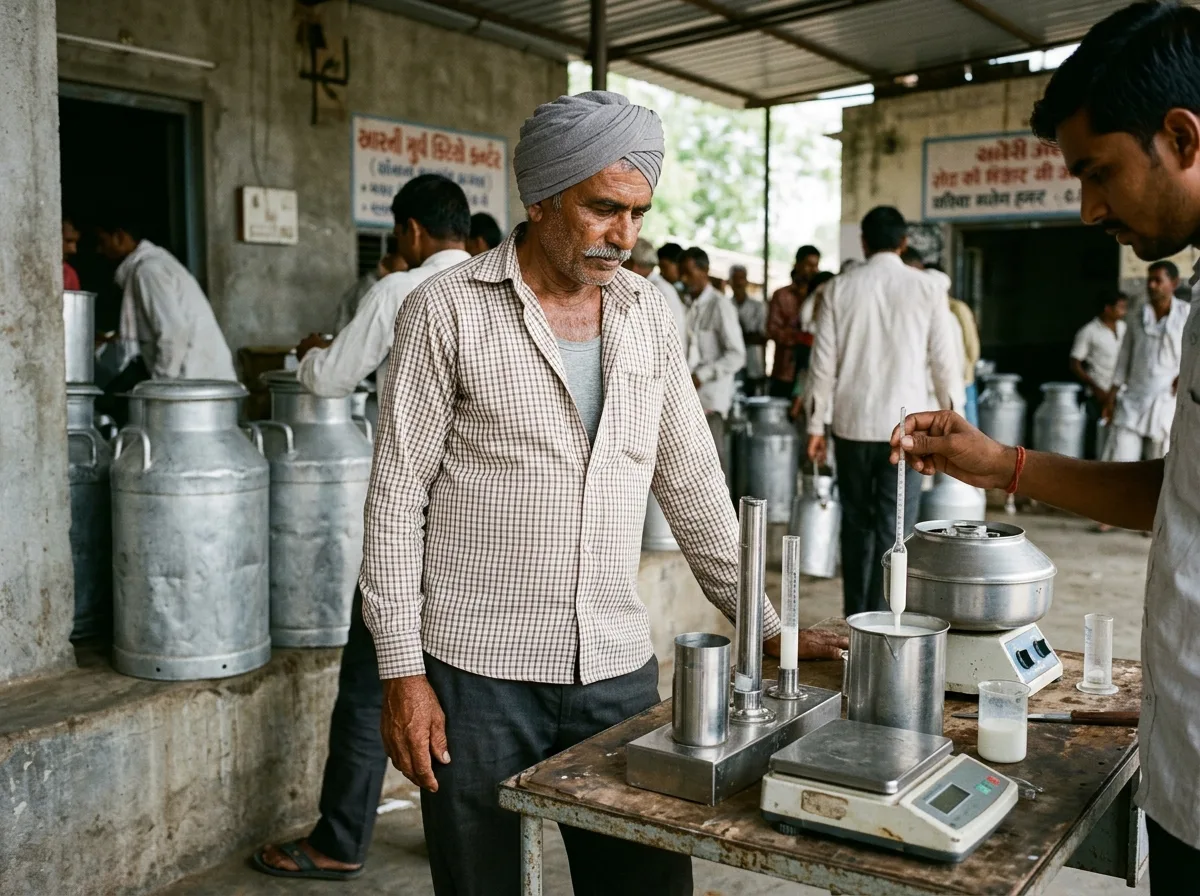
Every morning, across millions of dairy farms in India, milk is poured into cans and taken to collection centres. Within minutes, a number is assigned: fat percentage, perhaps SNF (Solid-Not-Fat) percentage. That number directly determines how much the farmer is paid. For many farmers, it is a number they receive without fully understanding how it was derived — and whether it is accurate.
The Basics: What Fat and SNF Measure
Milk is approximately 87% water. The remaining 13% is composed of several solid components — collectively referred to as Total Solids (TS). These solids fall into two groups: Fat, which includes milk fat (cream), and SNF (Solid-Not-Fat), which includes everything else — protein, lactose, minerals, and vitamins.
Fat content in cow milk typically ranges from 3.0% to 6.5% depending on breed, stage of lactation, and feed. SNF typically ranges from 8.0% to 9.5%. Buffalo milk has significantly higher fat (6-8%) and SNF (9-10%).
Both fat and SNF contribute to the commercial value of milk. Higher fat and SNF content produce more ghee, butter, paneer, and cheese per litre — which is why processors pay premiums for higher-quality milk.
How Testing Works: The Technology Landscape
| Method | How It Works | Accuracy | Speed | Typical Use |
|---|---|---|---|---|
| Gerber Method | Chemical separation using acid + centrifuge; fat layer measured manually | High (reference method) | 15-20 min | Lab, dispute resolution |
| Lactoscan / Ultrasonic Analyser | Ultrasonic waves measure sound speed through milk; fat, SNF calculated | Good (+/-0.1-0.2%) | 30-60 seconds | Village collection centres |
| Milk Analyser (FOSS, BioMilk) | Infrared spectroscopy; full profile in seconds | Very high (+/-0.05%) | < 30 seconds | Large dairy plants |
| Lactometer | Measures density only — inferred SNF; no direct fat reading | Crude (indirect) | Immediate | Field check only |
The Pricing Mechanism: How Farmers Are Paid
India does not have a single national milk pricing standard. Pricing varies by state, cooperative, private dairy, and season. But most organised dairy procurement operates on a fat-and-SNF basis, paying a rate per kg of fat and per kg of SNF delivered.
A typical pricing formula: Total Milk Price = (Fat% x Fat Rate per kg) + (SNF% x SNF Rate per kg). For example, if fat rate is Rs 350/kg and SNF rate is Rs 140/kg, a 4.5% fat, 8.5% SNF milk sample would earn: (0.045 x 350) + (0.085 x 140) = Rs 15.75 + Rs 11.90 = Rs 27.65 per litre.
A small change in tested fat or SNF can meaningfully affect farmer income, particularly at scale — which is why testing accuracy and transparency matter enormously.
Sources of Inaccuracy and Unfairness
The system works reasonably well in theory. In practice, several factors introduce inaccuracy:
- Calibration drift: Ultrasonic analysers require regular calibration against reference standards. Many village-level devices are not recalibrated frequently. Over time, systematic errors of 0.2-0.5% in fat or SNF can emerge.
- Sample preparation: Milk temperature affects ultrasonic measurement. Samples should be tested at a standardised temperature (40 degrees C is common). Testing warm milk versus cold stored milk can shift readings.
- Non-transparent reporting: Many collection centres show the farmer only the final fat number and price. The SNF reading, calibration record, and test methodology may not be visible.
- Batch mixing effects: At some centres, milk is mixed before testing — meaning an individual farmer's sample may not be tested separately. This disadvantages farmers with higher-quality milk.
What Transparent Systems Look Like
In well-functioning milk collection systems — such as the best-operated AMCU (Automated Milk Collection Units) — transparency is built into the process:
- Farmer sees the test in real time: The display shows fat%, SNF%, quantity, and computed price simultaneously, with the farmer present.
- Digital record generation: Every transaction is recorded with a timestamp, device ID, and individual reading — creating an auditable trail.
- Automatic payment integration: The reading directly triggers a payment calculation, reducing scope for manual adjustment.
- Regular device audit: Calibration logs are maintained and made available for cooperative or government audit.
- Dispute resolution pathway: Farmers can request a Gerber reference test if they dispute a reading.
The Impact of Digital Collection Infrastructure
The shift from manual to fully digital AMCU systems has significantly improved transparency in cooperatives that have adopted it. An AMCU combines a milk weighing scale, an ultrasonic milk analyser, a smart card reader, a display unit, a printer, and a data uplink — all integrated into a single workflow.
In a well-implemented AMCU system: the farmer arrives, presents a smart card, milk is weighed, tested, and the result is displayed within 60 seconds. A printed or SMS receipt is generated. The data is uploaded to a central server. At month end, payment is automatically calculated and transferred.
What Farmers Should Know and Demand
Awareness of the testing process is the foundation of fair pricing. Farmers are better served when they understand: which device is being used at their collection centre, how often it is calibrated, whether they can observe the reading in real time, and what dispute mechanism is available.
Cooperatives and private dairies that invest in transparent AMCU infrastructure, regular device calibration, digital records, and farmer-facing reporting not only build trust — they also benefit commercially from more accurate procurement data and reduced adulteration incentive.
The technology exists to make milk testing and pricing completely transparent. The question is whether the institutional will — and the investment in infrastructure — follows.